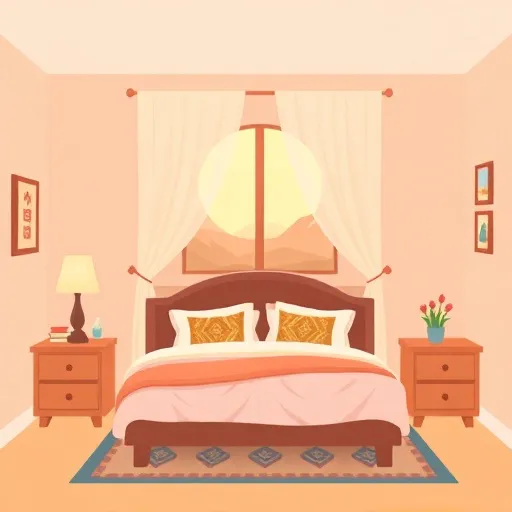
Recognizing bedroom
First, How Do You Know Your Bedroom Has Bad Feng Shui?
Before you start dragging furniture around and second-guessing every design choice, let's talk about recognizing the warning signs. Knowing how to fix bad feng shui in bedroom spaces starts with identifying what's actually wrong. Bad feng shui in a bedroom rarely announces itself loudly—instead, it shows up as a collection of nagging symptoms that most people write off as "just life." Here's what to watch for:
- You consistently wake up feeling drained or groggy, even after a full eight hours of sleep.
- Falling asleep is a struggle, or you keep waking up at 3 a.m. staring at the ceiling.
- The room feels heavy, cluttered, or oddly "stuck" the second you walk through the door.
- You notice recurring tension or arguments with your partner happening in that specific space.
- Your morning routine feels flat—you're unmotivated and emotionally blah before the day even starts.
If any of these ring a bell, take a breath. These are incredibly common signals, and the good news is that most of them trace back to a handful of fixable layout and energy issues. Understanding how to fix bad feng shui in bedroom problems begins right here—with honest observation. Let's break down each fix, one by one.
1. Reposition Your Bed Using the Command Position Rule for Better Sleep Energy
If there's one single adjustment that matters most when learning how to fix bad feng shui in bedroom setups, it's this: your bed belongs in the command position. That means you can see the door from where you sleep, but you're not directly in line with it. Ideally, the bed sits diagonally across from the doorway, anchored against a solid wall.
Why does this matter so much? In feng shui philosophy, the command position represents safety and control. When you can see who enters the room without being exposed, your nervous system relaxes. And in 2026, with so many people dealing with chronic stress and working from home, that subconscious sense of security is more valuable than ever. This is foundational knowledge for anyone serious about how to fix bad feng shui in bedroom spaces.
Common Bed Placement Mistakes and Layout Errors to Correct
- Bed directly facing the door: This creates an "exposed" feeling and is linked to restless sleep. Shift it diagonally if you can.
- Bed under a window: Drafts and outside noise disrupt deep sleep. Move the headboard to a solid wall.
- Bed floating in the middle of the room: Without a headboard against a wall, you lose stability. Anchor it properly.
- Bed beneath a heavy beam or sloped ceiling: This creates subtle pressure overhead. Reposition if possible, or soften it with fabric canopies.
If your room is small and options are limited, don't stress. Even a slight diagonal shift can make a noticeable difference. The goal is a subconscious feeling of safety—and your body will register that shift fast. This is one of the highest-impact moves for how to fix bad feng shui in bedroom layouts, regardless of square footage.
2. Declutter Your Bedroom Space to Improve Sleep Quality and Energy Flow
Here's a truth that modern psychology and traditional feng shui agree on completely: clutter blocks energy flow. Piles of laundry, stacks of old magazines, and a nightstand overflowing with random stuff create visual noise that your brain processes all night long. If you're researching how to fix bad feng shui in bedroom issues, decluttering is non-negotiable.
In 2026, the "cluttercore" aesthetic might be trending on social feeds, but it has no place in a bedroom where you're trying to rest. Take an honest inventory of your space:
- Clear off your nightstands—keep only essentials like a lamp, a book, and maybe a small plant.
- Remove work materials, laptops, and exercise equipment from the bedroom entirely.
- Donate or store clothing you haven't worn in a year.
- Deal with the "chairdrobe" situation (you know exactly the one).
A solid rule of thumb: if you don't love it or use it daily, it doesn't belong in your sleep space. This single habit can transform the energy of a room faster than almost anything else—and it's a critical step in how to fix bad feng shui in bedroom environments.
3. Balance the Five Elements of Wood Fire Earth Metal and Water
Feng shui works with five elemental energies: wood, fire, earth, metal, and water. A balanced bedroom incorporates a touch of each—without overdoing any single one. Here's how to bring them in naturally when you're thinking about how to fix bad feng shui in bedroom design:
Wood represents growth and vitality. Add it through wooden furniture, bamboo accents, or a healthy houseplant. Skip sharp, spiky plants near the bed—go for soft, rounded leaves instead.
Fire brings warmth and passion, but too much in a bedroom can disrupt sleep. A single candle, a warm-toned lamp, or a hint of red in your textiles is plenty. Less is more.
Earth grounds and stabilizes. Ceramic pots, stone textures, and warm beige or terracotta tones work beautifully. This element especially helps if you feel anxious or scattered.
Metal supports clarity and focus. Think metallic frames, round mirrors, or white and gray accents. Keep metal objects minimal—too much feels cold.
Water represents flow and calm. Soft blues, glass surfaces, or a small fountain can work. Avoid heavy water imagery like large paintings of crashing waves directly over the bed.
The goal isn't to decorate by checklist—it's to create a room that feels balanced. Walk in and ask yourself: does this feel harmonious, or does one element dominate? This elemental awareness is central to how to fix bad feng shui in bedroom spaces holistically.
4. Fix Mirror Placement and Reflection Issues in Your Bedroom
Mirrors are one of the most misunderstood feng shui elements in bedrooms. They reflect light and make small rooms feel larger—but a mirror facing your bed is considered a major no-no in traditional practice. It's believed to bounce energy around and disrupt restful sleep. Some people also feel startled by their own reflection at night.
Practical fixes for how to fix bad feng shui in bedroom mirror problems:
- If a mirror faces your bed, cover it at night with a curtain or fabric.
- Move freestanding mirrors to face a wall or hallway instead of the bed.
- Choose mirrored closet doors that stay closed while you sleep.
Not everyone is bothered by mirrors, and that's fine. But if your sleep quality has been off and you have a mirror pointing at your bed, this is an easy variable to test.
5. Light It Right with Warm Layered Lighting and Dimmable Bulbs
Harsh overhead lighting is an energy killer. In feng shui—and in modern sleep science—soft, layered lighting is the way to go. Think warm table lamps, dimmable bulbs, and maybe a salt lamp for a gentle amber glow. Lighting is one of the most overlooked aspects of how to fix bad feng shui in bedroom spaces.
Avoid fluorescent lights (harsh, flickering, and draining), a single bright ceiling light as your only source, and blue-toned or cool white bulbs in the evening—they interfere with melatonin production.
In 2026, smart lighting systems make it easier than ever to program your bedroom lights to shift warmer as the evening progresses. Even a simple dimmer switch is a meaningful upgrade.
6. Choose Calming Colors and Natural Textures for a Restful Bedroom
Color is energy. Bold reds and oranges are stimulating—great for a dining room, not so great for sleep. For a bedroom, lean toward soft blues and greens, warm neutrals like beige and cream, or muted lavender and blush tones.
Textures matter too. Layer natural fabrics—cotton, linen, wool—over synthetic materials when possible. A plush rug beside the bed adds warmth and grounds the space. The more your room invites touch, the more calming it becomes. Color and texture choices are essential when considering how to fix bad feng shui in bedroom aesthetics.
7. Handle Door and Window Energy Flow for Privacy and Containment
Doors and windows are considered the "mouths" of a room—where energy enters and exits. Keep the bedroom door closed at night for privacy and containment. Make sure your door opens smoothly and doesn't squeak. Hang curtains or blinds you can fully close to control light and outside energy. And avoid placing a mirror directly opposite the door—it's believed to push energy back out.
In small apartments or shared living situations, these tweaks can make your bedroom feel like a true retreat. These simple adjustments are part of how to fix bad feng shui in bedroom spaces with limited architectural flexibility.
8. Clear the Air with Better Ventilation and Air Purifying Plants
Stale air equals stagnant energy. Improving airflow is one of the most overlooked feng shui fixes. Open windows daily for a few minutes, even in colder months. Consider an air purifier with a quiet setting. Add a small plant that filters the air—just avoid anything too large or thorny near the bed.
Modern air quality research backs this up: better ventilation improves sleep quality, cognitive function, and mood. Feng shui has been saying it for centuries; science is just catching up. This is a frequently forgotten step in how to fix bad feng shui in bedroom environments.
9. Address Electronics and Blue Light Exposure in the Bedroom
Screens in the bedroom are a triple threat: they emit blue light, they invite mental stimulation, and in feng shui terms, they create "active" energy in a space meant for rest. In 2026, this is harder than ever—but small steps count.
Keep phones charging outside the bedroom, or at least on the far side of the room. Remove TVs and tablets from the bedroom if you can. If you must keep devices, put them in sleep mode and face-down. Even designating one "screen-free" corner can shift the energy noticeably. Managing electronics is a modern essential for how to fix bad feng shui in bedroom spaces.
10. Introduce a Bedroom-Specific Intention and Personal Meaning
This is the subtle but powerful piece. Feng shui isn't just about furniture—it's about intention. What do you want this room to mean? Restoration? Intimacy? Peace?
Once you know the answer, let the room reflect it. Place a small object on your nightstand that symbolizes calm—a stone, a shell, a photo that makes you smile. Keep a journal by the bed for evening reflection instead of doomscrolling. Use a calming scent—lavender, cedarwood, or sandalwood—via a diffuser or linen spray.
Intention turns a room from a passive space into an active ally for your well-being. This mindset shift is the final layer of how to fix bad feng shui in bedroom spaces—and arguably the most transformative.